Listen on: Apple Podcasts | Spotify | Amazon Music | Podcast Index | Overcast | YouTube
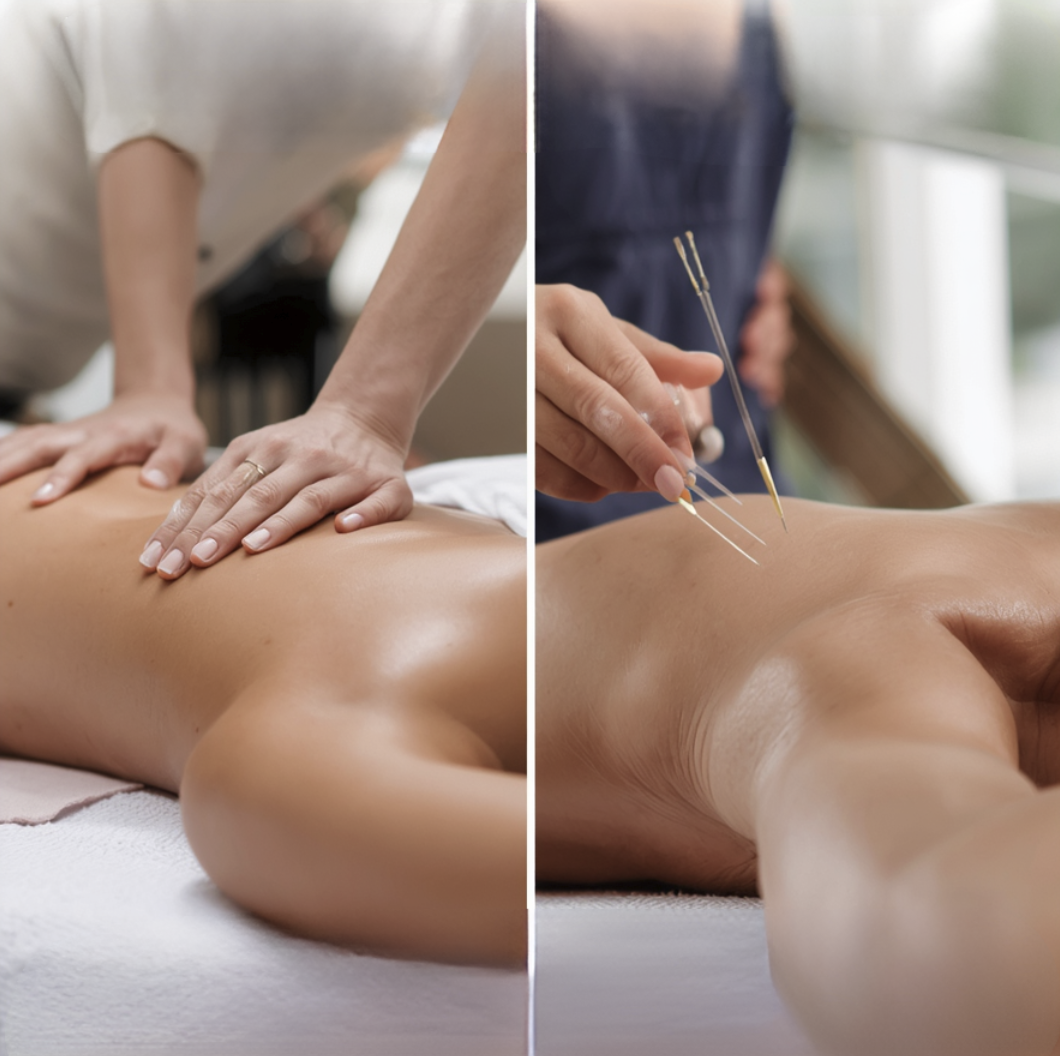
Massage and acupuncture are two of the most widely used complementary health therapies in the country. According to the 2022 National Health Interview Survey, 11 percent of U.S. adults used massage in the prior year, and 2 percent used acupuncture. At roughly $100 a session each, that is a lot of time, money, and hope being invested. So the obvious question is: do they actually work?
The honest answer is more complicated than either enthusiasts or skeptics tend to admit. These therapies can help—but usually for narrower things, and in shorter-lived ways, than the marketing suggests.
A Question Worth Separating into Two
Before looking at what the studies say, it helps to draw a distinction that rarely gets made explicitly. There is a difference between a treatment making you feel better and a treatment actually changing the underlying problem.
Massage might relax your muscles, reduce soreness, and lower your anxiety without accelerating tissue healing by a single day. Acupuncture might blunt pain signals without shortening the course of whatever is causing the pain. Feeling better temporarily is a real benefit—but it is a different benefit than fixing the problem, and conflating the two leads to inflated expectations and misplaced confidence.
The evidence, as we will see, is mostly on the “feel better” side of that line. The evidence for actually changing the course of injury or illness is thin.
The Comparison Problem
One thing that makes evaluating these therapies tricky is what researchers compare them against.
When massage or acupuncture is compared to no treatment at all, both tend to look quite effective. But the more informative comparison is against a sham treatment—a fake or imitation version of the therapy that seems real to the patient but lacks the active ingredient. In drug trials, this is a placebo pill. In acupuncture research, it might mean needles placed in the wrong locations. In massage research, it might be light touch or a simulated contact.
The problem is that sham treatments for massage and acupuncture are hard to design. As a recent evidence review in JAMA Network Open pointed out, even light touch may have real positive effects—which means the “placebo” isn’t really inert. And for acupuncture, the benefits look considerably more impressive when compared with no treatment than when compared with sham acupuncture. That gap matters when interpreting the evidence.
What the Massage Evidence Actually Shows
Massage is not one thing. Swedish massage is gentler and relaxation-focused. Deep tissue massage is more targeted and intense. Sports massage is designed around athletic recovery. Because the intervention varies so much, it is hard to draw clean conclusions across studies.
The proposed mechanisms are also multiple. Massage may work mechanically, by temporarily changing how tissues move. It may work neurologically, by altering pain signaling. Or it may work psychologically—lying on a table, listening to music, receiving attentive hands-on care changes how the brain interprets discomfort, even if the underlying tissue hasn’t changed at all. Almost certainly it is some combination of all three.
For immediate symptom relief, the case is reasonably solid. A randomized trial in 113 cardiac surgery patients found that massage significantly improved pain, anxiety, tension, and relaxation compared with quiet rest. A second study in 127 colorectal surgery patients found similar improvements in perceived pain, tension, and anxiety compared with a social visit. These are real results.
But they are short-term results in specific clinical settings. They do not tell us that massage has lasting effects or speeds tissue healing.
For neck and shoulder pain, the picture is mixed. A 2013 review of 12 studies with 757 participants found that massage outperformed inactive comparisons but did not clearly beat other active treatments like exercise or traction—and did not improve patients’ function overall.
For low back pain, the evidence is similarly unimpressive. A 2015 meta-analysis of 25 trials involving more than 3,100 patients found that the studies were of low quality, that massage appeared to help pain but not function, and that the advantage largely disappeared when compared against active controls. The authors’ own conclusion was frank: they had very little confidence that massage is an effective treatment for low back pain.
For post-exercise soreness, a 2020 systematic review pooling 29 studies found no evidence that sports massage improved strength, sprint performance, endurance, jump performance, or fatigue. It did find a small effect on flexibility and about a 13 percent reduction in delayed-onset muscle soreness—the kind of achiness that follows an intense workout. That is a real but modest benefit, and it is specifically about feeling less sore, not about performing better or recovering faster in any objective sense.
The overarching problem is quality. As that same JAMA Network Open review noted, the massage literature is dominated by small trials, varying techniques, inconsistent comparison groups, and limited methodological rigor. The popular claims—that massage breaks up scar tissue, flushes out toxins, improves circulation, or helps injured tissue heal faster—are mechanistic claims, and the clinical evidence for them is far thinner than the evidence for short-term relief.
What the Acupuncture Evidence Actually Shows
Acupuncture comes from traditional Chinese medicine and has been practiced in some form for at least 2,500 years. It is worth separating two types of claims about how it might work: local effects, where a needle near a painful area changes local sensitivity or pain processing, and distant effects, where a needle in the foot or hand is supposed to affect symptoms elsewhere in the body through meridians or other nonlocal pathways. What is actually happening biologically is not well understood.
For some uses, the evidence is reasonably encouraging. A 2025 meta-analysis pooling 16 randomized trials with 1,247 patients found that acupuncture did not significantly reduce acute nausea or vomiting in cancer patients but did significantly reduce delayed vomiting, particularly when treatment lasted at least five days. The study quality had limitations, but that is a meaningful signal.
For migraine prevention, the evidence is among the stronger examples in acupuncture research. A 2016 Cochrane review of 22 trials with nearly 5,000 participants found that acupuncture reduced headache frequency, outperformed sham acupuncture (though the margin was modest), and performed at least as well as preventive medications with fewer side effects. That is a combination worth taking seriously.
For chronic low back pain, the picture echoes what we saw with massage: more impressive against no treatment than against sham. A 2020 Cochrane review of 33 trials with 8,270 participants found some immediate pain relief compared with no treatment, but no clear advantage over sham acupuncture for either pain or function. That gap suggests that some of the benefit may come from the ritual of treatment—the attentive practitioner, the expectation of improvement—rather than from needle placement itself.
For tennis elbow, a 2020 systematic review found some positive trials but described the evidence base as small and methodologically shaky. The most defensible conclusion is that acupuncture may help short-term pain in tennis elbow. That is a long way from a durable, clearly superior treatment—and there is no evidence it shortens the duration of the condition.
For the broader list of things acupuncture is sometimes marketed for—fertility, allergies, asthma, weight loss, immune boosting, general wellness—the evidence simply is not there. That does not mean every one of those uses has been definitively disproven. It means the claims have run well ahead of the science.
Where This Lands
The evidence does not support a blanket verdict in either direction. Saying “massage works” or “acupuncture is powerful” overstates what the research shows. But dismissing them entirely misses the real, if narrow, benefits that do appear.
Massage seems most useful for immediate relaxation, short-term symptom relief, and modest reductions in exercise-related soreness. Acupuncture has a stronger case in a few specific areas: reducing delayed vomiting in cancer care, preventing migraines, and providing some short-term relief in certain chronic pain conditions. In both cases, the benefits are mostly about how you feel, not about structural healing or changing the course of disease.
When the claims get bigger—when a practitioner suggests these therapies will heal your injury faster, correct structural problems, or treat a long list of unrelated conditions—the evidence is not there to back that up.
The answer is less dramatic than the hype, but more useful: these therapies may help, for certain problems, in limited ways. Knowing that going in lets you make a clear-eyed choice about whether the benefit is worth your time and money—rather than assuming the treatment is doing more than it actually is.
Scientific research underscores the intricate interplay between lifestyle factors and human health. Exercise, a cornerstone of well-being, enhances cardiovascular health, boosts mood, and promotes cognitive function. Coupled with proper nutrition, it fosters optimal physical performance and supports immune function. Beyond the individual, social ties exert profound effects on health, buffering against stress and enhancing longevity. Meanwhile, exposure to hot and cold environments elicits physiological adaptations, bolstering resilience and metabolic efficiency. Adequate sleep, essential for cognitive consolidation and metabolic regulation, underscores the importance of restorative rest. Moreover, the mind-body harmony underscores the intricate relationship between mental and physical health, highlighting the profound impact of mindfulness and stress management on overall well-being. Integrating these factors into daily life cultivates a holistic approach to health promotion and disease prevention.