December 11, 2025
Microplastics Are Everywhere—Here’s What You Can Try (With Realistic Expectations)


Listen on: Apple Podcasts | Spotify | Amazon Music | Podcast Index | Overcast | YouTube
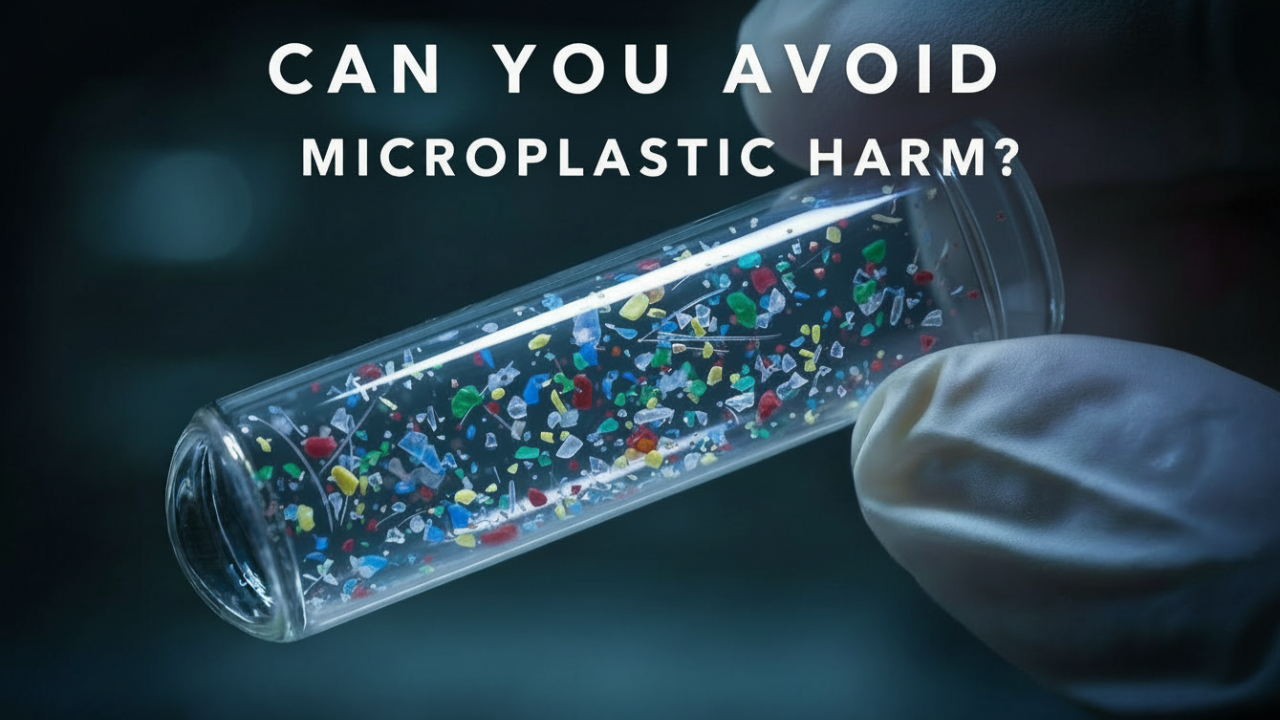
If you’ve felt a rising unease about microplastics, you’re not alone. They’re turning up in water, food, indoor air—and yes, in human tissues. The science is early and imperfect, but a few signals deserve our attention while we keep our cool and focus on pragmatic steps.
First, a quick level set. In 2024, researchers reported micro- and nanoplastics inside carotid artery plaque (blood vessels feeding the brain) removed during surgery; people whose plaques contained these particles had a 4-fold higher 3-year risk of heart attack, stroke, or death compared with those whose plaques did not. That’s an association, not proof of causation—but it’s a strong signal and biologically plausible via inflammation. (New England Journal of Medicine. New England Journal of Medicine+2PubMed+2)
Another sobering finding: using newer detection methods, a typical liter of bottled water can contain roughly a quarter-million plastic particles, most of them nanoplastics—far smaller than traditional microplastics and therefore more likely to traverse biological barriers. (NIH Research Matters; Columbia recap. National Institutes of Health (NIH)+1)
Air matters, too. Estimates suggest we inhale tens of thousands of microplastic particles per day, with far higher levels indoors than outdoors—important because most of us spend ~90% of our day inside. (PLOS ONE. PLOS) Meanwhile, policy momentum is uneven and global plastic production is still projected to grow ~70% by 2040 without stronger action. (OECD report. OECD+2OECD+2)
What about the brain? An important autopsy study looked for microplastics in brain tissue. There was a 50% increase in microplastics in the brains of patients in 2024 compared to 2016. These findings are compelling—and still associative. We don’t yet know the clinical significance. But, the direction is worrisome (Nature Medicine study page; PubMed entry. Nature+1)
How I interpret the evidence (and how I suggest you do, too)
I use a simple frame: respect the signal, avoid the spiral. The cardiovascular and neurologic findings justify sensible steps to trim exposure, but microplastics are so ubiquitous that “zero” is not a realistic target. The question becomes: which low-effort habits likely nudge risk in the right direction without hijacking your time, budget, or sanity? What we don’t know is how much would these steps lower the microplastic burden in our bodies. And, what does that lowering mean for our later health and longevity.
Below are things you can try. Because microplastics are everywhere, it’s unclear how much any one change will reduce your total exposure—but stacking a few easy wins is reasonable while we wait for stronger data. Progress, not perfection.
Five pragmatic swaps (and why I think they’re worth it)
1) Favor glass or stainless for hot food and drinks; avoid microwaving plastic.
Heat increases plastic shedding and migration of additives. Switching storage and reheating to glass or stainless is a low-friction move with potential upside. If you do use plastic, keep it cool (think cold leftovers only) and replace scratched containers.
2) Rethink your water routine.
Where it’s safe, consider filtered tap water in a reusable (non-plastic) bottle. The bottled-water nanoplastics finding doesn’t make bottled water “bad” across the board, but it does tip the convenience calculus toward tap + filter for daily use. (NIH Research Matters. National Institutes of Health (NIH))
3) Mind the indoor air.
Indoor concentrations appear substantially higher than outdoor, and inhalation may be a major daily input. A HEPA purifier in the rooms you use most, regular vacuuming, and improving ventilation are realistic steps. Bonus: choose more natural-fiber clothing (cotton, wool); synthetics shed microfibers that can become airborne. (PLOS ONE. PLOS)
4) Small kitchen tweaks.
Swap plastic cutting boards for wood or glass; tiny shavings from cut marks can become one more source. Choose loose-leaf tea when possible—many tea bags use plastic mesh that can release particles in hot water. (Precautionary rationale; consistent with shedding concerns and lab detection advances. National Institutes of Health (NIH))
5) “Plastic-light” habits you’ll actually keep.
Bring a travel mug. Store bulk foods in glass. Buy fewer single-use items when a durable option is handy. None of these will erase exposure, but they’re low effort and tend to stick—in my experience, that’s what accumulates into potentially meaningful change over years. (Policy context: even aggressive global actions still project heavy plastic throughput without systemic shifts. OECD. OECD)
A word about policy—and why your personal effort still matters
System-level solutions (designing out single-use plastics, improving waste systems, rethinking tires and textiles, standardizing detection methods) may move the needle far more than any individual habit. Yet policy takes time, and scenarios suggest production keeps climbing without stronger action. Your individual choices won’t “solve” microplastics—but they can reduce your likely exposure at the margins, model practical norms for your family and workplace, and buy some peace of mind while science catches up. (OECD projection. OECD)
What I’m watching next
- Cardiovascular outcomes. The carotid-plaque study is a wake-up call; replications in other populations and vascular beds will matter. (NEJM. New England Journal of Medicine)
- Standardized measurement. Newer techniques are revealing much smaller particles; harmonizing methods will help us compare studies and track trends. (NIH Research Matters. National Institutes of Health (NIH))
- Brain tissue data. Autopsy findings are worrisome; the unanswered questions are how important is the dose, distribution, and clinical impact. (Nature Medicine page. Nature)?
Bottom line
You can’t eliminate microplastics exposure. Neither can I. But you can make a handful of simple, sustainable swaps that likely reduce it—especially from hot food-plastic contact, bottled water reliance, and indoor air. Keep the mindset: “try this” rather than “fix everything.” The science will evolve; until then, aim for the easy wins you’ll actually keep.
If this was helpful, share it with someone who appreciates calm, evidence-first guidance—and if you haven’t yet, follow the Live Long and Well podcast and join my newsletter for practical longevity steps that fit real life.
—Dr. Bobby Dubois
Scientific research underscores the intricate interplay between lifestyle factors and human health. Exercise, a cornerstone of well-being, enhances cardiovascular health, boosts mood, and promotes cognitive function. Coupled with proper nutrition, it fosters optimal physical performance and supports immune function. Beyond the individual, social ties exert profound effects on health, buffering against stress and enhancing longevity. Meanwhile, exposure to hot and cold environments elicits physiological adaptations, bolstering resilience and metabolic efficiency. Adequate sleep, essential for cognitive consolidation and metabolic regulation, underscores the importance of restorative rest. Moreover, the mind-body harmony underscores the intricate relationship between mental and physical health, highlighting the profound impact of mindfulness and stress management on overall well-being. Integrating these factors into daily life cultivates a holistic approach to health promotion and disease prevention.