Listen on: Apple Podcasts | Spotify | Amazon Music | Podcast Index | Overcast | YouTube
A few weeks ago I was in the middle of a hard set with my strength trainer — muscles burning, breath short — when a somewhat embarrassing thought (for a wellness afficianado) floated through my head: This isn’t fun. Should I just quit?
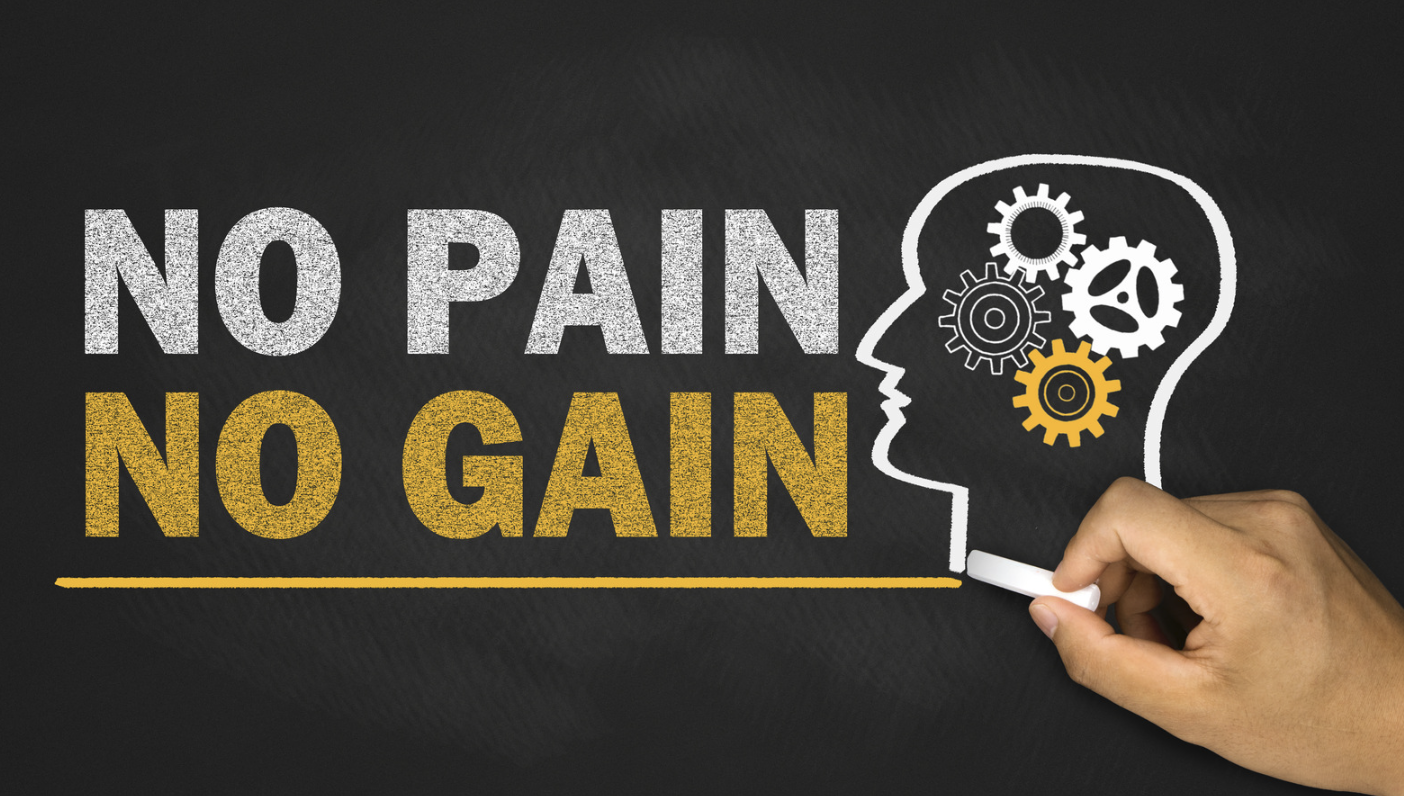
I didn’t quit that set. But the thought stuck with me, because it pointed at something this famous slogan gets wrong. We all grew up with no pain, no gain, and it isn’t entirely false — muscles do need challenge, runners do need harder efforts to get faster, and sometimes we have to sit in a little discomfort to grow. But the slogan hides a danger nobody warns you about. And it isn’t the pain.
Every health habit charges a tax
Every healthy habit charges a tax. Strength training is paid for in soreness and a little dread. Running costs you the effort of getting out the door. Eating well costs planning and the occasional pang of hunger. The tax isn’t bad — often it’s exactly the price of getting better. But when the tax climbs too high, people don’t gently dial it back. They stop paying it altogether. They cancel the membership, abandon the plan, and walk away from the whole thing. And the moment you quit the habit, every bit of benefit you were chasing disappears with it.
That’s the quitting I worry about — not stopping a set a few reps early, which is often the smart move, but giving up the habit for good. Which is why I’ve come to think the real problem in no pain, no gain isn’t the word pain. It’s the word gain — the quiet assumption that more is always the goal. More weight, more speed, more discipline, more optimization, forever.
More, More, More isn’t necessary
What surprised me, when I went back to the research, is how clearly the science doesn’t support more, more, more. For the parts of health we can actually measure, the benefit doesn’t climb in a straight line — it rises fast and then flattens. When researchers pooled the studies on strength training and living longer, the biggest drop in mortality showed up at about 30 to 60 minutes of strength work per week — not per day — with little added benefit beyond an hour. Running tells the same story: as little as five to ten minutes a day of easy running was linked to roughly 30% lower mortality and about three extra years of life, and the people who ran far more didn’t gain dramatically more protection. Zoom out to physical activity in general and the benefit plateaus well before the extremes. Past a point, “more” mostly just raises the tax not the benefits (very much).
So if more isn’t always the answer, what is? I think it comes down to two questions you can ask about any part of your health.
Question 1: Which season am I in?
Start by asking: Am I in a season of growth, or a season of maintenance? Am I genuinely still short of where I need to be — in which case a higher tax is worth paying — or have I already arrived, so my real job now is to preserve what I built, at the lowest tax that holds the gain? This is where a lot of well-meaning advice quietly goes sideways. Coaches often tell you to start small, then add another habit, then another as your confidence grows. That’s genuinely good advice for getting started — but notice it has no finish line. “Always add the next thing” is no pain, no gain in friendlier clothing.
I watch this play out at home. My wife Gail uses an approach called Bright Line Eating — clear, firm boundaries around food. In her growth season, those bright lines were exactly what helped her lose the weight; the structure was the point. But she never treated the strictest version as a life sentence. Once she arrived, she shifted into a maintenance season — eating more, and more diversely, in a way she can actually sustain for the long haul. Same person, two seasons, two very different taxes. And the research is encouraging here: among people who keep weight off long-term, maintenance often becomes easier over time, not harder.
Question 2: Will I know when I’ve arrived?
Which raises the obvious problem buried in that first question: how will I actually know when I’ve arrived? Kids are wonderful at this. Every parent knows the sound from the back seat — are we there yet? It’s annoying, but it’s also wise, because a child has a crystal-clear sense of arriving. The car stops, and you’re there. Most of our health goals have no such destination — just an odometer that never stops. “Lose weight.” “Sleep more.” “Get stronger.” What is the endpoint? There isn’t one…
So I’d trade these goals for ones you’ll recognize when you arrive. For strength: Can I get up off the floor without using my hands? Can I stand on one leg long enough to pull on my socks?
For sleep: Do I wake up refreshed, without that afternoon wall of sleepiness? Instead of a number on the scale: Have I lost enough that my blood sugar is out of the pre-diabetic range? And here’s the part I love — these aren’t the soft option. The simple ability to rise from the floor and to balance on one leg for ten seconds are each associated with survival in older adults. These are observational studies, so practicing the test won’t by itself buy you years — but they tell us these everyday capacities are worth aiming at. A functional goal isn’t lowering the bar. It’s aiming at the thing that actually counts, and one you’ll know you’ve hit.
No Pain, No Gain Can Be Our Parking Brake
If any of this sounds familiar, it’s because it’s a cousin of something I’ve written about before — perfectionism, what I’ve called the “parking brake”. Drive with it engaged and the whole trip is slower, hotter, and less enjoyable, until one day you just don’t want to drive at all.
Voltaire put it more elegantly: the best is the enemy of the good. Perfectionism whispers not good enough yet; no pain, no gain whispers always more. Same brake. Both drain the joy out of the very habits that are supposed to help us — and joyless is exactly when we abandon. It’s no accident that when researchers ask why people stick with exercise, enjoyment and self-chosen motivation keep predicting who keeps going.
A marathon, not a sprint
Health is a marathon, not a sprint — something you want to be doing not for eight weeks, but for the next thirty years. Growth has its season, and so does maintenance. Maintenance isn’t quitting; it’s quit prevention.
So here’s my question for you, borrowed from the back seat: in the part of your health you care about most, are you actually still growing — or have you already arrived, and just haven’t let yourself say we’re there?
Scientific research underscores the intricate interplay between lifestyle factors and human health. Exercise, a cornerstone of well-being, enhances cardiovascular health, boosts mood, and promotes cognitive function. Coupled with proper nutrition, it fosters optimal physical performance and supports immune function. Beyond the individual, social ties exert profound effects on health, buffering against stress and enhancing longevity. Meanwhile, exposure to hot and cold environments elicits physiological adaptations, bolstering resilience and metabolic efficiency. Adequate sleep, essential for cognitive consolidation and metabolic regulation, underscores the importance of restorative rest. Moreover, the mind-body harmony underscores the intricate relationship between mental and physical health, highlighting the profound impact of mindfulness and stress management on overall well-being. Integrating these factors into daily life cultivates a holistic approach to health promotion and disease prevention.