Listen on: Apple Podcasts | Spotify | Amazon Music | Podcast Index | Overcast | YouTube
Here’s the paradox I see every week: exercise is the single most powerful intervention for healthy aging—yet one poorly timed injury can erase months (even years) of progress. Where’s the line between “use it or lose it” and unnecessary risk? As a physician, scientist, and Ironman triathlete in my late 60s, I’ve wrestled with this personally and professionally. Here’s how I think about training as we age—and the evidence-based steps I recommend.
What Really Changes With Age
Muscle: Beginning in our 30s, we lose roughly 1–2% of muscle each year. Strength often falls faster than mass because we preferentially lose fast-twitch (type II) fibers—the ones that generate power to climb stairs, get out of a chair, or catch a toe before a fall. That selective loss of power fibers is well-documented in aging muscle physiology reviews and helps explain why “feeling strong” slips faster than the mirror suggests (overview).
Bone: Men and women both lose bone with age, but the trajectories are different. Around the menopause transition, women can lose ~2–3% per year at the spine and ~1–2% at the hip and forearm, then the rate slows; men tend to lose more gradually across decades (CDC brief). That’s why osteopenia and osteoporosis are so common in women over 50—and why targeted training matters.
Joints: Osteoarthritis risk rises with age, but running itself isn’t the villain many assume. In a 20-year Stanford cohort of older runners vs. non-runners, knee OA did not occur more often in runners (cohort study). A systematic review of ~14,000 people found the same on knee X-rays—no greater OA in runners; if anything, non-runners reported more pain (review). Even among people who already have knee OA, self-selected running wasn’t linked to worse structure and was associated with less knee pain (analysis). The real OA accelerants are prior joint injuries (meniscus, ligament) and significant excess weight.
So no—aging doesn’t mandate retreat. It does demand strategy.
Four Evidence-Backed Upgrades to Your Training
1) Prioritize Strength—Relentlessly.
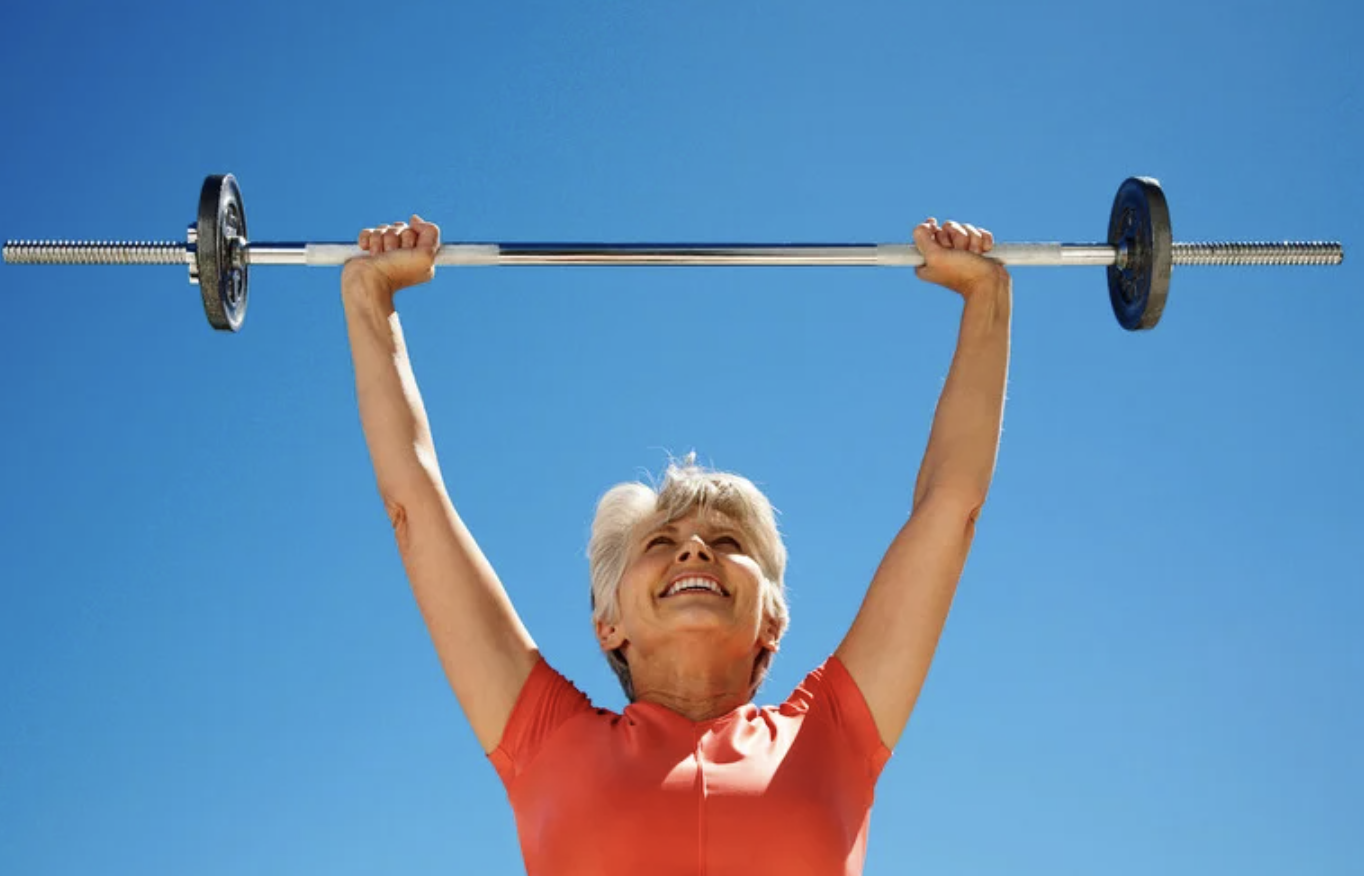
Strength is the reservoir you’ll draw from for decades. The more you build now, the more you can afford to lose later—and the slower you’ll lose it. The great news: it’s never too late to start. Randomized and controlled trials show adults in their 70s and even 80s can add ~10% muscle size and ~40% lower-body strength in as little as 12 weeks of progressive resistance training, with very low adverse-event rates (overview of late-life RT efficacy/safety). Two well-planned sessions per week can be transformative. If you’re new, get medically cleared and start light; if you’re seasoned, keep the bar moving—progressive overload still works.
2) Train Power on Purpose.
Because type II fibers fade fastest, protect them. Sprinkle in brief, safe power work: controlled step-ups with an explosive intent, mini-hops, or 20–30-second hard intervals on a bike or rower—tailored to your orthopedic history. Short, high-effort bouts improve neuromuscular drive and fast-twitch function in older adults (review). Keep reps crisp, rests generous, and landings soft. And don’t forget the raw materials: adequate protein across the day meaningfully supports adaptations.
3) Load Your Skeleton—Intelligently.
Bones need signal. A meta-analysis of 80 trials in 5,500 postmenopausal women found that programs combining resistance training with impact (e.g., hopping progressions or tolerable running) improved spine and hip bone mineral density—benefits seen regardless of menopausal timing or whether women started with osteopenia or osteoporosis (meta-analysis). If you already have low bone density or a fracture history, talk with your clinician first; then build from low to moderate impacts as tolerated.
4) Recover Like It’s a Training Variable—Because It Is.
Some evidence suggests middle-aged lifters experience more soreness and slower strength recovery after the same workload than younger adults (study). Healing in other tissues (like skin) also slows with age. Translation: don’t be afraid to add an extra rest day after hard sessions. “Easy” doesn’t mean “nothing”—walk, mobility, light spinning—just avoid stacking maximal stressors back-to-back.
The Hidden Risk: Setbacks That Spiral
Here’s the uncomfortable truth: the cost of injury rises with age—not just because injuries are more common, but because time off accelerates losses you may not fully regain. Even brief immobilization in older adults can produce measurable thigh muscle and strength loss within 10–14 days. I’ve seen this spiral too often: injury → less movement → rapid muscle loss → worse balance and resilience → higher reinjury risk.
That doesn’t mean bubble-wrap your life. It means audit your risk-reward tradeoffs. I still ride, run, and lift. But I’ve reduced outdoor cycling in traffic and do more work on the trainer. If you ski, maybe skip the double-blacks when conditions are sketchy. If you love running, keep running—but progress thoughtfully, lift consistently, and respect niggles early. The goal isn’t to eliminate risk; it’s to avoid unforced errors that trigger long layoffs.
A Simple, Sustainable Week
If you want a template, here’s one I often recommend (adjust for your baseline and medical context):
- 2×/week strength: lower-body push/pull, hip hinge, single-leg work, upper-body push/pull, core carries. 2–3 sets, 6–12 reps, last 2 reps challenging but crisp.
- 2–3×/week aerobic: 20–45 minutes at conversational pace.
- 1–2× mini-power modules: 6–10 total reps of safe, crisp efforts (step-ups with intent, bike sprints, mini-hops), full recovery between reps.
- Daily movement & mobility: walking, balance practice, ankles/hips/thoracic spine.
- At least 1 true rest day—more after unusually hard sessions.
Bottom Line
Exercise remains the most potent “drug” for longer healthspan. After 50, the smartest path isn’t to retreat—it’s to train specifically for the systems that fade fastest (strength, power, and bone), to recover like an adult, and to trim needless risk so your consistency stays intact. That’s how you keep doing what you love, decade after decade.
If this resonated, subscribe to the podcast and my newsletter for practical, evidence-supported steps you can use this week. Let’s keep you strong, durable, and fully in the game.
Scientific research underscores the intricate interplay between lifestyle factors and human health. Exercise, a cornerstone of well-being, enhances cardiovascular health, boosts mood, and promotes cognitive function. Coupled with proper nutrition, it fosters optimal physical performance and supports immune function. Beyond the individual, social ties exert profound effects on health, buffering against stress and enhancing longevity. Meanwhile, exposure to hot and cold environments elicits physiological adaptations, bolstering resilience and metabolic efficiency. Adequate sleep, essential for cognitive consolidation and metabolic regulation, underscores the importance of restorative rest. Moreover, the mind-body harmony underscores the intricate relationship between mental and physical health, highlighting the profound impact of mindfulness and stress management on overall well-being. Integrating these factors into daily life cultivates a holistic approach to health promotion and disease prevention.